Winery Tour Over 50: Where Enjoyment Meets Connection
Reading time: 10 minutes
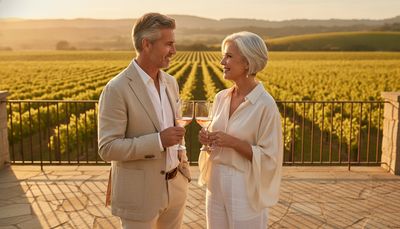
Last Saturday I stood among the vine rows at the Knipser winery in the Palatinate (Pfalz) region of Germany, a glass of Spätburgunder (Pinot Noir) in hand, having a conversation about the process of maturing. Not just that of the wine, but our own as well. The person I was talking to, a retired architect from Boston, had also signed up for the winery tour over 50. Between the tasting and the cellar visit, an ease developed that I rarely experience at classic dating events. The focus here wasn't on finding a partner, but on enjoying things together – and that is exactly what makes encounters like these so valuable.
Winery tours over 50 offer a relaxed setting for authentic conversation. The focus is on the wine, the winemaker, the landscape – the pressure to constantly seem interesting falls away. According to a 2023 survey by the German Wine Institute, 42% of participants in guided wine tastings in Germany are over 50, and the share is rising. This age group appreciates quality, background knowledge and the chance to meet like-minded people in small groups.
Why Wine Tastings Are Ideal Meeting Places for the 50 Plus Generation
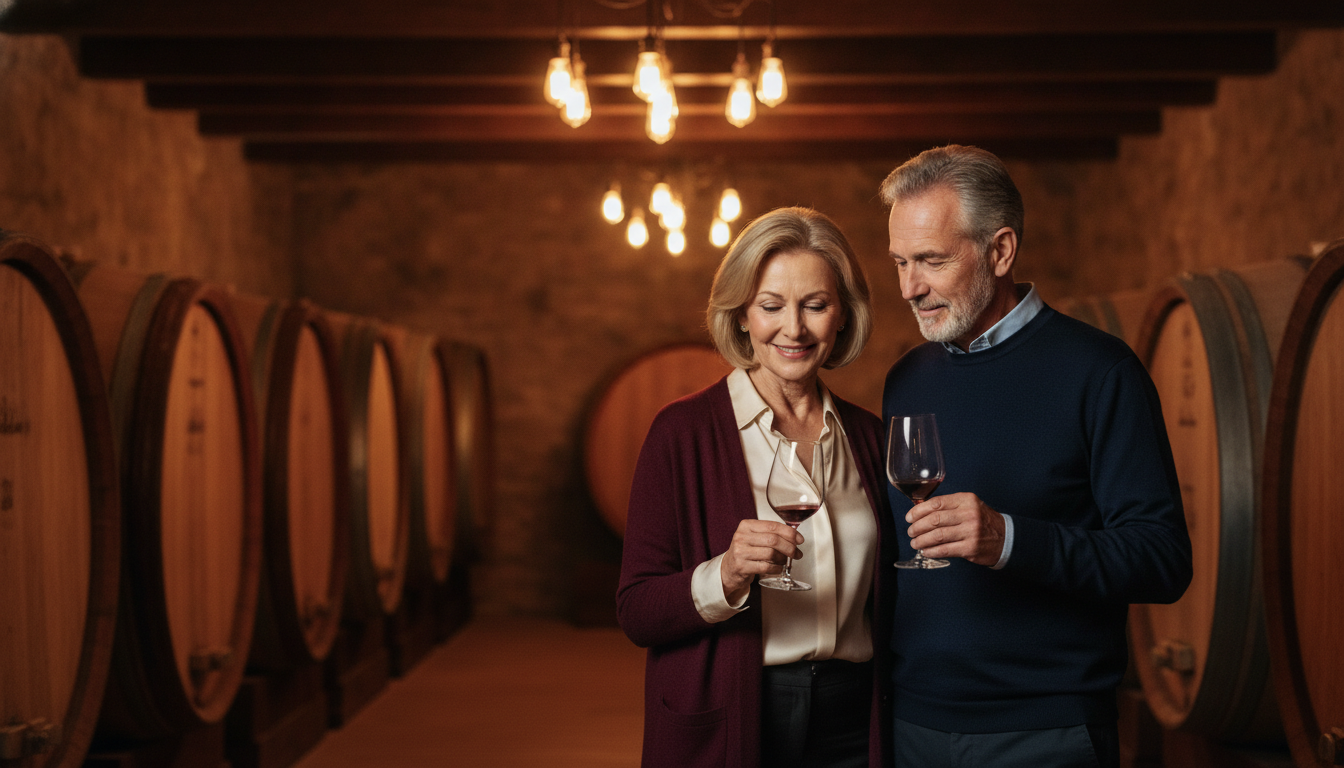
When I started dating again three years ago, I tried a lot of things: singles sites, coffee dates, hiking groups. But the most relaxed encounters I had were always where a shared interest took center stage. At a wine tasting in the Rheingau, I met Tom, with whom I'm still friends today. We were standing in front of a 500-liter (about 130-gallon) wooden cask in the cellar of the Johannishof winery, the cellar master was explaining mash fermentation, and suddenly a conversation about patience and the process of maturing in life unfolded between us.
This natural conversational atmosphere arises because several factors come together. First, the wine itself offers countless things to talk about: aromas, growing regions, personal preferences. You don't have to be an expert – curiosity is enough. Second, the surroundings and sensory impressions create a relaxed mood. The scent of wooden casks, the cool half-light of the vaulted cellar, the sweep of the vineyards – all of it slows you down. Third, the groups are usually manageable: 8 to 15 people, a mixed age structure, often with a high share of singles or couples over 50 who are deliberately seeking cultural experiences.
Choosing the Right Wine Region for Relaxed Encounters
Not every wine region is equally suited to enjoyable encounters. I prefer areas that are easy to reach, have an established wine culture and offer wineries with a personal atmosphere. The Pfalz, with its roughly 57,000 acres (23,000 hectares) of vineyards, attracts visitors with family-run estates like the von Winning winery in Deidesheim, which regularly offers tours on Saturdays at 2 p.m. followed by a tasting of five wines for about $40 per person. The Rheingau around Rüdesheim offers not only outstanding Rieslings but also the chance to stroll through the historic lanes together after the tour.
I especially appreciate smaller wineries that are still run by the owner in person. There you learn not only about wine, but about passion, tradition and sometimes about life decisions. The Wittmann winery in Westhofen (Rheinhessen), for example, is run by the fourth generation – Philipp Wittmann takes time for questions on his tours and talks about the challenges of organic farming. Personal stories like these also open up us participants and make it easier to share something about ourselves.
Encouraging Authentic Conversation During Winery Visits
The biggest advantage of winery tours is that they provide a natural structure. You don't have to rack your brain over what to say next – the program sets the rhythm. Between two tastings there's a pause in which you can chat. The shared activity – smelling, tasting, discussing – creates a bond without you constantly having to look each other in the eye or produce small talk.
I've gotten into the habit of being consciously open at events like these. That doesn't mean approaching others pushily, but coming across as present and approachable. A smile, a remark about the wine you've just tasted, a question to the group – that's often enough. When I want to enjoy a wine date over 50 with confidence rather than impress, it helps me to remember that nobody has to be perfect. Even an “Honestly, all I taste is grapes” can be charming if it's meant authentically.
Concrete Tips for Winery Tours as a Date Idea
Many people ask me whether you should go on these tours alone or bring someone along. My answer: both have merits. Going alone signals openness and makes it easier for others to strike up contact. With a friend you feel safer, but you run the risk of staying inside your own two-person conversation. I usually go alone and make it my goal to talk to at least three people – a small test of courage that almost always pays off.
For clothing, the rule is: authentic, but put together. It gets cool during a cellar tour, so in summer bring a light jacket or a scarf. Flat, closed shoes make sense when you're walking between vine rows – stilettos look out of place here. Good skin care over 50 gives you a natural glow without making you feel masked. I like to wear a scarf or a striking earring – a small detail that gives people something to talk about.
It's best to book the tour directly with the winery, not through portals. That way you often get better information and can ask questions in advance. Many winemakers offer special formats for small groups, such as sunset walks through the vineyards followed by a tasting. The Reichsrat von Buhl winery in Deidesheim offers a two-hour tour on Saturdays at 3 p.m. for about $50, including six wines and finger food – ideal for heading to one of the nearby restaurants together afterward.
Which Wine Regions Are Especially Suited to Relaxed Encounters
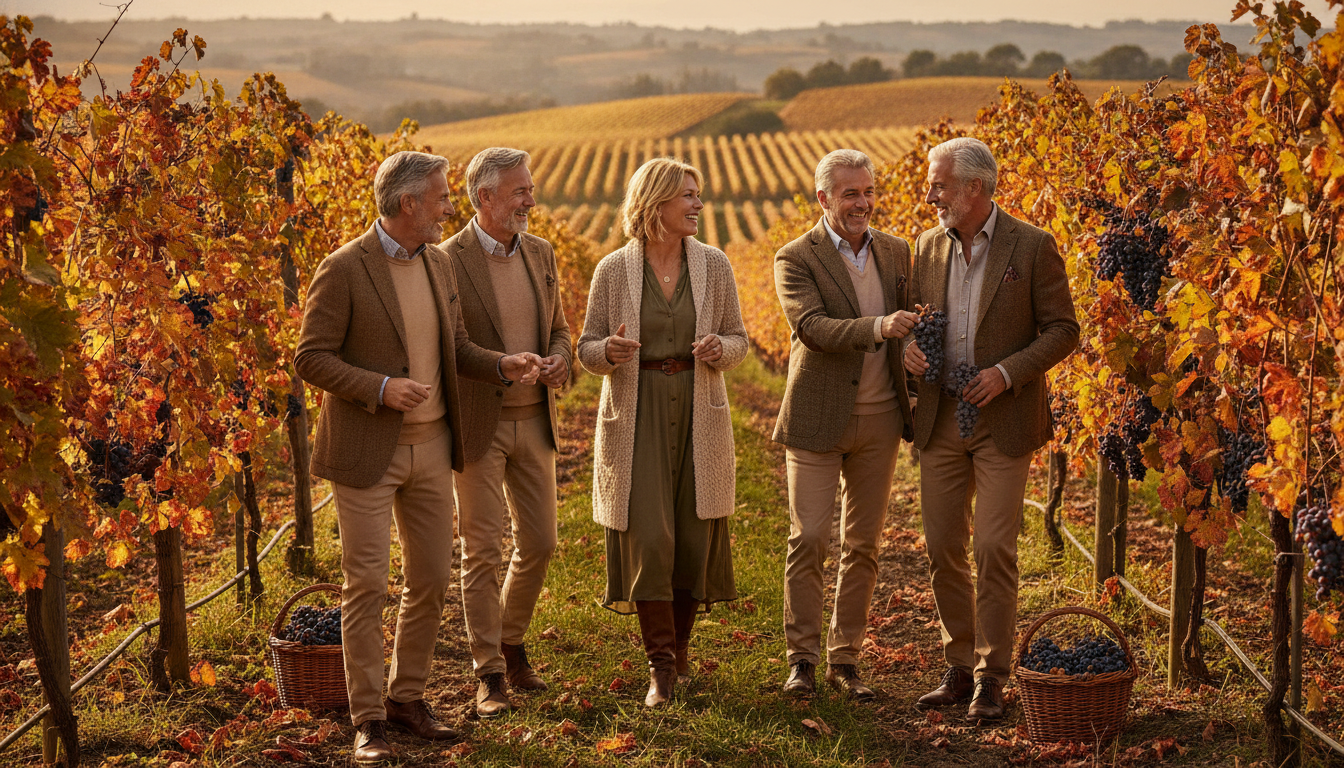
Germany has 13 wine-growing regions, but not all of them are equally inviting for singles over 50. I look for good infrastructure, appealing dining and an atmosphere that invites longer stays. Along 151 river miles (243 km) between Trier and Koblenz, the Mosel offers one of the steepest wine landscapes in Europe. Here you'll find small family estates like the Markus Molitor winery in Bernkastel-Wehlen, which offers tours on Thursdays at 4 p.m. with five Riesling variations for about $30.
Franconia, centered on Würzburg, stands out with its unique Silvaner and the characteristic Bocksbeutel bottle. The Staatlicher Hofkeller Würzburg offers cellar tours every Saturday at 2 p.m. in the historic vaults beneath the Residenz – an impressive setting that gives you plenty to talk about. Baden, as the southernmost wine-growing region, attracts visitors with its mild climate and its proximity to the Black Forest. Here wine tastings combine nicely with hikes or with a visit to a botanical garden.
- Pfalz: Germany's second-largest wine-growing region with more than 3,000 wine estates, ideal for spontaneous day trips from Frankfurt or Stuttgart
- Rheingau: A compact region with a worldwide reputation for Riesling, easy to reach from Wiesbaden and Mainz, with a high density of top wineries
- Mosel: A romantic river landscape, perfect for weekend trips, with many hotels offering packages that include wine tastings
- Franconia: A cultural setting in and around Würzburg, with the option to combine wine, art and architecture
- Rheinhessen: Germany's largest wine-growing region, less touristy than the Rheingau, with authentic encounters in Straußwirtschaften (seasonal wine taverns)
From Wine Tasting to Real Connection
Not every encounter on a winery tour over 50 leads to a relationship or an intense friendship. Sometimes it stays at a nice conversation, an exchange of business cards, a smile at parting. But that very lack of commitment is part of the appeal. We practice making contact, being open, enjoying the moment – without pressure of expectation. And sometimes, when the chemistry is right, something more comes of it.
After a tour at the Dr. Bürklin-Wolf winery in Wachenheim, one participant told me she had attended various wine events for over half a year before she met someone she clicked with. But that time wasn't lost – she had gotten to know wine, discovered new places, met interesting people and, above all, experienced herself as open and sociable again. That self-perception is worth its weight in gold when you're looking for a partner over 50.
Practical Organization: From Registration to Follow-Up
Most wineries offer online booking systems on their websites. I recommend booking at least a week in advance, since popular weekend slots often fill up quickly. Costs range from about $20 to $65 per person, depending on scope. Some wineries also offer combination packages with an overnight stay – the Knipser winery, for example, works with the Hotel Pfälzer Hof in Bad Dürkheim and offers a two-day package for about $210 per person, including a tour, a six-course dinner and an overnight stay.
After the tour, it's a good idea to stop in at the winery or somewhere nearby. Many estates have their own tasting room or restaurant. In the Pfalz, traditional wine taverns like the Dorfschänke in Forst are an ideal way to end the day. There you sit at long wooden tables, easily strike up conversations with others and can review the wines you've tasted once more in a relaxed atmosphere. I often jot down the names of interesting conversation partners and send a short email after a few days – not pushy, but as a sign that the encounter meant something to me.
Lifestyle Dating and Culinary Experiences in Later Life
Platforms like MySugardaddy understand lifestyle dating as more than classic partner search. It's about shared interests, about sharing moments of enjoyment, about meeting as equals. Winery tours fit this concept perfectly: you meet people who appreciate quality, take time for the good things in life and are open to new experiences. Anyone who meets someone here already has an important thing in common: appreciation for refined enjoyment.
I've found that experiences like these are valuable even independent of a specific search for a partner. They keep us active, curious and socially engaged. After a fulfilling afternoon among the vines and cellar vaults, I feel more alive, more open – and that very glow makes me interesting to others, too. It's a positive cycle: those who treat themselves well come across as attractive to others.
Frequently Asked Questions About Winery Tours Over 50
Do I need to know a lot about wine to take part in a tour?
No, not at all. Most tours are explicitly aimed at beginners and the curious, not experts. The winemaker or cellar master explains everything essential in an understandable way, and questions are explicitly welcome. On my first tour I admitted that I often mix up dry and off-dry wines – that earned me sympathy and an instructive conversation. Genuine interest counts for more than expertise.
How do I find out which wineries offer tours?
Most wineries publish their program on their own website. Regional tourism associations also offer overviews. The Pfalz tourism association, for example, lists more than 200 wineries with tours on its website pfalz.de, sortable by location and date. A phone call to the winery is also worthwhile – there are often individual appointments for small groups that aren't advertised online.
Can I also deliberately meet other singles on a winery tour?
Some wineries and event organizers offer special singles wine tastings, for example through platforms like Aktiv50Plus or regional singles groups. These formats are explicitly geared toward making contact. Personally, though, I appreciate the open tours because encounters happen more naturally there. Nobody wears a sign around their neck saying “I'm single” – you get to know each other through shared interests, not through relationship status.
What does a typical winery tour cost and what's included?
Simple cellar tours with three to four tastings cost between $15 and $30 per person and last about 90 minutes. More extensive programs with a vineyard visit, five to seven wines and small bites cost $40 to $55 and take two to three hours. Exclusive formats with a multi-course meal and fine wines can also cost $90 to $130. As a rule, all wines tasted as well as water and bread are included. For getting started, I recommend the mid-range price category – that's usually where the value for money is best.
What if I have a low tolerance for alcohol?
Wine tastings are about tasting, not getting drunk. You don't have to finish every wine – the tasting pours are small, and it's perfectly accepted to pour leftover wine into the spittoon provided. Many wineries also offer non-alcoholic grape juice for the tasting, or you can switch to water halfway through the tour. I ease into the wines, drink plenty of water in between and enjoy consciously instead of in quantity. That way I stay clear-headed and can truly enjoy the encounters.
Conclusion: Discovering New People Between Vine Rows and Maturing
Winery tours over 50 combine enjoyment with real quality of connection. They offer a relaxed setting in which conversation arises naturally, without the pressure of typical dating situations. Whether in the Pfalz, the Rheingau or the Mosel – everywhere there are wineries that bring people together with passion and hospitality. There I haven't just refined my taste in wine, but also learned to approach people more openly again. Sometimes a shared glass of Riesling is enough to realize you're on a similar wavelength. And even if no deeper connection comes of it, you're left with a fulfilling afternoon of lovely impressions and the certainty: I'm active, open and ready for encounters. That very attitude makes us attractive in our best years – not a perfect performance, but authentic interest in life and in other people. Give it a try, book a tour in your region and be surprised by who you meet between the vine rows.