Wine Date Over 50: Enjoy With Confidence Instead of Showing Off
Reading time: 12 minutes
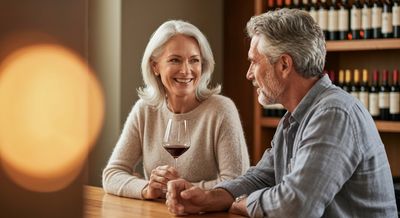
Last week I was sitting with my friend Maria in a wine bar in Chicago's Lincoln Park when she told me about her first date with Tom. He had invited her to a wine tasting, and she panicked: “Cornelia, I can barely tell a Chardonnay from a Merlot. What if I embarrass myself?” I know exactly this worry from many of my readers. A wine date over 50 can seem intimidating, but it really doesn't have to be. Today I'll show you how to stay authentic at a wine tasting on a first date, create a real connection, and come across as confident without pretending to be someone you're not.
Wine tasting as a date idea is becoming more and more popular. According to a 2023 study by the German Wine Institute, 42 percent of Germans over 50 take part in an organized wine tasting at least once a year. The numbers keep rising, especially in big cities. The reason: wine gives you things to talk about, relaxes the atmosphere and signals that you know how to enjoy life. But that very expectation can cause stress if you're not familiar with grape varieties, vintages and terroir.
Why a Wine Tasting Works So Well as a First Date
A wine date over 50 is fundamentally different from the classic coffee meetup or restaurant visit. There's a shared activity you can both focus on without having to maintain eye contact constantly. That takes the pressure off. At a tasting at a wine bar downtown, for example, you try five to eight wines in about two hours. In between there are always natural pauses for talking.
The second advantage: you experience something new together. Even if your date is a wine connoisseur, he or she hasn't tried every wine yet. That levels the playing field. According to a 2024 survey by the market research institute Ipsos, 67 percent of the singles over 50 surveyed rate shared experiences as more important for finding a partner than pure conversation dates. A wine tasting offers exactly that: experiencing instead of interrogating.
Third, the choice of wine says a lot about personality. Does someone prefer bold reds or crisp whites? Do they like to experiment or stick with what they know? These preferences often reveal more about a person than three hours of small talk. That's why a wine date over 50 works so well as a format for getting to know each other.
The Right Preparation: What You Really Need to Know
Don't worry, you don't have to earn a sommelier certificate. I recommend a simple preparation that takes 30 minutes at most. Look up beforehand which grape varieties are most common in American wine shops. The most important ones are: Chardonnay, Cabernet Sauvignon, Pinot Noir, Sauvignon Blanc and Merlot. You don't need to know more than that. If you can place these five names, you already come across as informed.
Second step: think about which flavors you generally like. Fruity or dry? Sweet or crisp? That has nothing to do with wine knowledge, but with your personal taste. And that is exactly what you're allowed to show on a wine date over 50. Nobody expects you to tell oak barrel aging from a stainless steel tank. But if you can say “I prefer fruity wines,” you're giving your date a clear signal.
If you feel unsure, book an introductory tasting beforehand. In Austin, for example, a local wine shop offers an open tasting with six wines every Thursday starting at 6 p.m. for $30. There you can practice in a relaxed setting without a date tagging along. That gives you confidence.
Restaurant Etiquette for Wine: How to Order With Confidence at a Romantic Dinner
Imagine you're not sitting in a wine bar but in an upscale restaurant in Manhattan. The wine list is 40 pages long. Now, whatever you do, don't panic. Let me share my tried-and-true three-step approach that will always make you look good.
First: ask for a recommendation to go with the meal. Tell the sommelier: “I ordered the fish, what goes well with it?” That's perfectly legitimate and shows that you value harmony. Most sommeliers will then suggest two to three options in different price ranges. Never pick the cheapest, but not the most expensive either. The middle option is always a safe choice.
Second: when you taste the wine, swirl the glass gently, smell it and take a small sip. Practically chew the wine before you swallow. That shows you're tasting consciously. You don't have to say anything. A brief nod is enough. If the wine really does have a flaw (smells like vinegar or a musty cellar), you can absolutely say so. That's not a sign of being demanding, but of being quality-conscious.
Third: avoid jargon. Sentences like “This wine has an interesting tannin structure” sound forced if you don't talk about wine every day. Better to say: “It tastes bolder than I expected” or “It's pleasantly fruity.” Authenticity beats expert knowledge. Always.
Wine Etiquette for Dating: Avoiding the Most Common Faux Pas
There are three classic mistakes on a wine date over 50 that I keep seeing. First: drinking too fast. A wine tasting is not a drinking contest. Especially with six or eight wines, the alcohol adds up. Drink a glass of water after each wine. That's customary and expected. Good wine bars always have a carafe on the table.
Second: discussing the price. If your date ordered the wine, never comment on the price. Neither positively nor negatively. That's considered impolite. If you're paying together, settle that beforehand or simply split it fifty-fifty. On MySugardaddy, for example, where women and men with different financial means often meet, it's quite common for one person to treat the other. In that case: thank them sincerely and offer to pick up the check next time.
Third: refusing a wine because it isn't to your taste. At an organized tasting you also try wines you don't care for. That's part of it. You don't have to finish everything, but at least take a taste. If you don't drink alcohol at all, communicate that clearly beforehand. Most wine bars now also offer non-alcoholic alternatives. A wine bar in Portland, Oregon, for example, has carried six non-alcoholic wines since 2024, presented just like the classic ones.
How to Create a Real Connection on a Wine Date
Now we come to the most important part: how do you use the wine tasting to really get closer? The biggest mistake is treating a wine date over 50 as a performance. It's not about impressing. It's about enjoying things together and getting to know each other in the process.
Ask questions about your date's preferences. “Which wine do you like best so far?” or “Do you drink wine regularly at home, too?” are easy ways in. These often grow into longer conversations about travel, eating habits or memories. Maria later told me that Tom raved about a wine region in Tuscany he had visited ten years ago. That led to a conversation about travel plans, and they realized they both love going to Italy. Without the wine tasting, this topic might never have come up.
Another tip: share your honest impressions. If you don't like a wine, feel free to say so. “That's too dry for me” is perfectly fine. Your date will appreciate it because it shows you're authentic. Maybe he or she even shares your opinion. According to a 2023 study by the German market research institute GfK, honesty is by far the most important criterion when looking for a partner over 50. 81 percent of respondents in Germany rated authenticity higher than education, looks or income.
Conversation Topics Around Wine: How to Keep It Relaxed
You don't need an expert discussion about terroir and vintage. Instead, you can talk about personal experiences. Here are three tried-and-true openers that I use myself:
- “When was the last time you had a really good wine, and where was that?” – This opens the door to travel or restaurant stories.
- “Is there a wine that reminds you of a particular experience?” – Almost everyone has a little anecdote, often from a vacation or family celebrations.
- “Would you rather drink really expensive wine once a year or good everyday wine regularly?” – This question playfully reveals your outlook on life and often sparks amusing discussions.
Questions like these take you away from pure wine knowledge and toward the person. That's exactly what makes a good wine date over 50. If your date starts telling you about their own wine trip through the south of France, just listen. Genuine interest is more attractive than feigned expertise.
After the Wine Tasting: Where Things Can Go From Here
The wine tasting usually lasts one to two hours. Afterward, the question often hangs in the air: do we go somewhere else or say goodbye? I recommend making that decision spontaneously. If the chemistry is right, suggest dinner together. Many wine bars either have their own kitchen or partner with restaurants nearby. A wine bar in San Francisco, for example, has worked with a small bistro three doors down since 2023. There you can easily carry on.
If you're unsure whether your date still has the time and desire, put it openly: “I could go for something to eat, how about you?” That gives the other person the chance to answer honestly. If they decline, don't take it personally. Maybe they really do have an early appointment the next morning. Then arrange a second date. A good wine date over 50 always leaves you wanting more.
Send a short message the next day. Thank them for the lovely evening and mention a detail you particularly enjoyed. “The Pinot Noir was really great, and I kept thinking about your Tuscany story today” shows that you were attentive. Little gestures like that stick. If you're on platforms like MySugardaddy, where lifestyle dating takes center stage, this kind of appreciation is especially important. It shows that you're not just interested in a nice evening, but in the person.
Alternative Formats: When the Classic Wine Tasting Doesn't Fit
Not everyone likes organized tastings with ten other participants. Maybe you're both rather introverted or want to get to know each other without distractions. In that case, suggest a private wine tasting. Many wine merchants now offer tastings for two. In New York, for example, some wine shops organize private sessions starting at $95 for two people, with six wines and small bites. That's more intimate and gives you more room for conversation.
Another option: a vineyard walk. In regions like Napa Valley, Sonoma or the Finger Lakes, there are guided tours through the vineyards with several stops for tasting. A guided vineyard walk in Sonoma, for example, covers five miles through the vineyards with four tasting stops at different wineries. That combines exercise, nature and wine. Perfect if you both enjoy being outdoors. According to the German Hiking Association, more than 120,000 people in Germany took part in such wine hikes in 2023, and the number is rising.
If You're a Wine Newbie Yourself: How to Say So Charmingly

Back to Maria's original question: what if you really have no idea about wine? My answer is simple: say so. “To be honest, I'm no wine expert, but I like trying new things” is a likable statement. It shows openness and takes the pressure off you. Most people react positively. Often it even creates a dynamic in which your date is happy to explain something to you. That strengthens the connection.
If your date really knows a lot about wine, let him or her talk. Ask questions. “How can you tell the wine is good?” or “What makes this vintage special?” are honest questions that show interest. Important here: only ask questions whose answers genuinely interest you. Feigned curiosity is spotted immediately. If the topic doesn't grab you, gently steer the conversation in another direction after a few minutes.
By the way: many people overestimate other people's wine knowledge. A 2024 survey by the German Sommelier Association shows that only 12 percent of Germans can tell different grape varieties apart in a blind tasting. Most rely on the label and their taste preferences. That means your date probably feels just as unsure as you do, and simply hides it better. Use that insight to go into your wine date over 50 more relaxed.
Frequently Asked Questions About the Wine Date Over 50
How should I behave at a wine tasting on a first date?
Stay authentic and focus on the shared experience instead of expert knowledge. Try every wine, share your honest impressions and ask questions about your date's preferences. Keep a moderate pace when drinking and use the natural pauses to talk. Show interest in the person, not just the wine.
What should I wear to a wine tasting on a date?
Smart casual is the right choice. For women, a stylish blouse with good jeans or a simple dress works well. For men, a button-down shirt with chinos or dark jeans with a blazer is fitting. Avoid overly formal clothing like a suit or evening gown, but also outfits that are too casual, like sneakers and a T-shirt. The atmosphere in wine bars is upscale, but not stiff.
How do I order wine correctly on a first date?
Ask the sommelier for a recommendation to go with the meal. From the suggested options, choose the mid-range price category. At the tasting, swirl the glass gently, smell it and take a deliberate sip. A brief nod is enough as approval. Avoid jargon and stick to simple descriptions like fruity, bold or mild.
What do I do if I don't like the wine on a date?
Say so honestly, but politely. “Personally, that's a bit too dry for me” is perfectly legitimate. At a tasting you don't have to finish everything, but you should try every wine. If the wine has an actual flaw (cork taint, a note of vinegar), you can tell the sommelier. That shows quality awareness, not being demanding.
How expensive should the wine be at a romantic dinner?
That depends on the restaurant. In an upscale restaurant, $40 to $70 for a bottle is appropriate, in a wine bar $35 to $55. Never pick the cheapest option, that looks stingy, but not the most expensive either, as that can seem forced. The middle price range shows that you value quality without showing off.
My Personal Takeaway on the Wine Date Over 50
By the way, Maria later told me how her date with Tom turned out. At the start, she told him she's not a wine pro. He laughed and admitted he was just an interested amateur himself. They tasted together, laughed about an especially dry red wine, and both discovered their fondness for fruity white wines. In the end they went out to dinner together, and by now they see each other regularly. The wine date over 50 was the perfect icebreaker, precisely because both stayed authentic.
That is exactly my most important piece of advice: use the wine tasting as a setting to get to know the person, not as a stage to prove yourself. Wine is something to enjoy that brings people together. It's not about right or wrong, but about shared experience. If you take that to heart, your next wine date over 50 will become a relaxed, authentic meeting from which perhaps more will grow. You might also be interested in my thoughts on overcoming limiting beliefs over 50, which sometimes stand in our way when dating. Or take a look at how relaxed trips with a travel partner over 50 work out. Both complement the topic of the wine date wonderfully.
Dare to go, be curious and enjoy the moment. That is exactly what makes the difference between a stiff meetup and a real getting-to-know-each-other. Cheers to your next date.